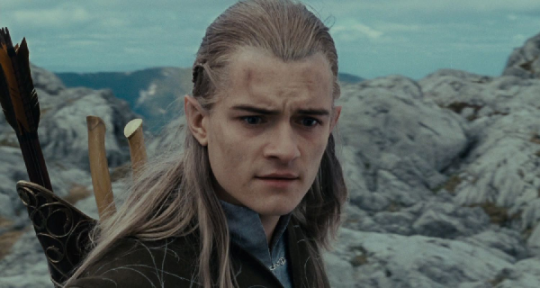
Legolas pretty quickly gets in the habit of venting about his travelling companions in Elvish, so long as Gandalf & Aragorn aren’t in earshot they’ll never know right?
Then about a week into their journey like
Legolas: *in Elvish, for approximately the 20th time* ugh fucking hobbits, so annoying
Frodo: *also in Elvish, deadpan* yeah we’re the worst
Legolas:
~*~earlier~*~
Legolas: ugh fucking hobbits
Merry: Frodo what’d he say
Frodo: I’m not sure he speaks a weird dialect but I think he’s insulting us. I should tell him I can understand Elvish
i mean, honestly it’s amazing the Elves had as many languages and dialects as they did, considering Galadriel (for example) is over seven thousand years old.
english would probably have changed less since Chaucer’s time, if a lot of our cultural leaders from the thirteenth century were still alive and running things.
they’ve had like. seven generations since the sun happened, max.
frodo’s books are old to him, but outside any very old poetry copied down exactly, the dialect represented in them isn’t likely to be older than the Second Age, wherein Aragorn’s foster-father Elrond started out as a very young adult and grew into himself, and Legolas’ father was born.
so like, three to six thousand years old, maybe, which is probably a drop in the bucket of Elvish history judging by all the ethnic differentiation that had time to develop before Ungoliant came along, even if we can’t really tell because there weren’t years to count, before the Trees were destroyed.
plus a lot of Bilbo’s materials were probably directly from Elrond, whose library dates largely from the Third Age, probably, because he didn’t establish Imladris until after the Last Alliance. and Elrond isn’t the type to intentionally help Bilbo learn the wrong dialect and sound sillier than can be helped, even if everyone was humoring him more than a little.
so Frodo might sound hilariously formal for conversational use (though considering how most Elves use Westron he’s probably safe there) and kind of old-fashioned, but he’s not in any danger of being incomprehensible, because elves live on such a ridiculous timescale.
to over-analyse this awesome and hilarious post even more, legolas’ grandfather
was from linguistically stubborn Doriath and their family is actually from a
somewhat different, higher-status ethnic background than their subjects.
so depending on how much of a role Thranduil took in his
upbringing (and Oropher in his), Legolas may have some weird stilted old-fashioned speaking tics in his
Sindarin that reflect a more purely Doriathrin dialect rather than the Doriathrin-influenced Western Sindarin that became the most widely spoken Sindarin long before he was born, or he might have a School Voice
from having been taught how to Speak Proper and then lapse into really
obscure colloquial Avari dialect when he’s being casual. or both!
considering legolas’ moderately complicated political position, i expect he can code-switch.
…it’s
also fairly likely considering the linguistic politics involved that Legolas is reasonably articulate in Sindarin, though
with some level of accent, but knows approximately zero Quenya outside of loanwords into Sindarin, and even those he mostly didn’t learn as a kid.
which would be extra hilarious when he and gimli fetch up in Valinor in his little homemade skiff, if the first elves he meets have never been to Middle Earth and they’re just standing there on the beach reduced to miming about what is the short beard person, and who are you, and why.
this is elvish dialects and tolkien, okay. there’s a lot of canon material! he actually initially developed the history of middle-earth specifically to ground the linguistic development of the various Elvish languages!
Legolas: Alas, verily would I have dispatched thine enemy posthaste, but y’all’d’ve pitched a feckin’ fit.
Aragorn: *eyelid twitching*
Frodo: *frantically scribbling* Hang on which language are you even speaking right now
Pippin, confused: Is he not speaking Elvish?
Frodo, sarcastically: I dunno, are you speaking Hobbit?
Boromir, who has been lowkey pissed-off at the Hobbits’ weird dialect this whole time: That’s what it sounds like to me.
Merry, who actually knows some shit about Hobbit background: We are actually speaking multiple variants of the Shire dialect of Westron, you ignorant fuck.
Sam, a mere working-class country boy: Honestly y’all could be talkin Dwarvish half the time for all I know.
Pippin, entering Gondor and speaking to the castle steward: hey yo my man
jed and octavius giving each other cute nicknames like if you agree
everyone uses “jed” and “octy” so im gonna dig right down into all of my experience with latin
i like to imagine that the first time jedediah and octavius actually properly met, octavius misheard his name as “iudicata” (the feminine form of iudicatus, in latin the i does double work as ‘i’ and ‘j’) and ended up calling jed “iudicatrix” for a while due to his long hair and judgemental attitude
octavius probably still calls jed ‘judy’ when he’s pissed off at him. the first time this nickname comes up in an argument, they end up having a very long question and answer discussion where octavius has to explain latin. a lot
the first time they ever see Judge Judy is like a week later and oct just “look its you!” and they both start laughing so hard they cry
at one point when their relationship gets closer and octavius realizes hes crushing hard, octavius accidentally starts calling jed “iucundus” and when jed finally figures out what it means when they’re eating a cupcake larry brought them, he goes beet red and slips right off the icing
I’ve always headcanoned that Octavius is a bit of a dude magnet (with or without realising it,) and Jedediah gets jealous af about it.
Some of the other cowboys start to get a little besotted with the general and soon there are at least three or four tagging along for a car ride around the museum because they want to speak to Octavius. Jed is annoyed because car rides are their thing but he keeps his mouth shut.
Larry sometimes gives Octavius a ride in his pocket if he needs to go somewhere and Jed does not appreciate all that “my liege” talk after he’s dropped back off at his diorama.
Ahkmenrah often stops by the dioramas because he thinks the miniatures are cute — especially Octavius, who always gets flustered in the presence of royalty and often kisses the pharoah’s hand to show his respect. Jedediah is ready to cut someone.
Lancelot is the worst. He plays a lute, recites poetry and even gives the Roman little flowers from the floral exhibit as a token of his “friendship.” When Octavius giggles and blushes and hides behind his helmet, Jed finally stands up and hollers, “HEY, THAT’S MY ROMAN GENERAL, GO GET YOUR OWN.”
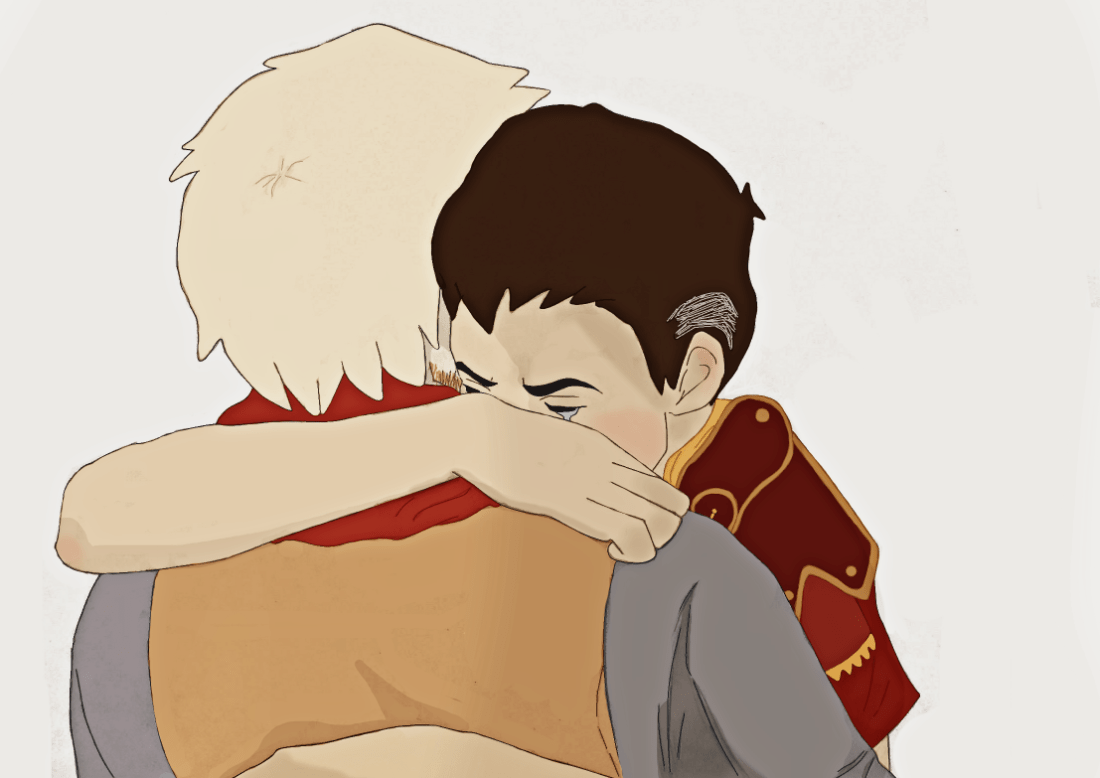
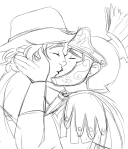
So, I’ve been trying to get back into drawing again and using a shit ton of references to practice on and this kind of turned out not so shitty, so I decided to share. Reference here.
Because it is absolutely outrageous that we didn’t get to see these two say goodbye to each other before they went back to being inanimate objects for three years.
To me, Baelor I is a criticism of the pursuit of peace to the exclusion of all other policies. It is unquestionable that Daeron I employed a vigorous war policy, and that there was little (although not nothing) in his reign which spoke to a greater political strategy of incorporation of Dorne besides martial conquest. While there was certainly aggression on both sides of the Dornish Marches prior to Daeron’s war, and I’m sure Daeron cited Dornish raids in the southern part of his domain as justification for the invasion, there was surely more than a small amount of desire for glory as the motivating factor (albeit glory for the Westerosi state as well as personal glorification of Daeron himself). There are valid criticisms, in other words, to be had of Daeron’s War of Dornish Conquest, and valid arguments that could paint Daeron as the aggressor, attempting by force to bring the last independent polity of the Westerosi continent under the control of the Iron Throne.
However, Daeron I’s death is unambiguous: he was murdered, while riding beneath a peace banner, on his way to meet with the Dornish aristocracy to discuss fealty and peace terms. Westerosi armies acknowledge the rights of those traveling under peace banners to have guaranteed safe conduct until they reach their destinations; indeed, it was only after Tyrion’s planned treachery to free Jaime from Riverrun that Catelyn says Ser Cleos “forfeited the protection of [his] peace banner”. The king’s death, occurring in gross violation of this sort of agreement, demanded recognition from his successor. The killing of the Dornish hostages would be the most obvious and traditional response to the king’s own murder, but some action had to be taken to show that the Iron Throne regarded such a move from its would-be vassal state as wholly unacceptable.
Yet what did Baelor do? Not only did he walk to Dorne barefoot, “clad only in sackcloth” – a wordless sign of penitence from the Iron Throne to the Dornish regicides – but he “publicly forgave his brother’s killers” and spoke of “bind[ing] up the wounds” of Daeron’s conquest. He negotiated a peace treaty with Dorne that not only presumably recognized the latter’s independence (especially since the marriage of young Daeron and Princess Mariah seemed to include the princess surrendering her succession rights), but agreed to the return of the very hostages Daeron had taken to guarantee Dorne’s fealty. He submitted to the humiliation of House Wyl in trying to recuse Prince Aemon without complaint or censure. In all, Baelor put himself, and by extension the nation he now governed as king, as a supplicant of House Martell and the Principality of Dorne – a dramatic reversal from Daeron I’s regnal policy.
Doubtless, Baelor was sincere in wanting peace. Yet what sort of message did his actions send to his new subjects? Thousands from across the continent had joined the Young Dragon in invading Dorne, and many had died in the enterprise (including no less a casualty than the heir to Winterfell). They had followed their king’s orders, had shed blood and even died for him, and had watched him be murdered in a manner totally against the prescribed norms of Westerosi warfare – only to see their new liege say “all is forgiven”. In a real way, these men might have thought Baelor was telling them “you were wrong to follow Daeron”. There was no meaning to be had by the deaths in Dorne, no outrage that could be felt over the king’s murder. Baelor was committed to peace, but it was a peace that ignored the sacrifices of his countrymen and the murder of his predecessor. In his eagerness to end martial conflict with Dorne, Baelor would bend over backwards to pretend Daeron’s war had never happened – and never mind the Houses that had lost husbands, fathers, brothers, and sons, not the least his own.
Peace is not inherently preferable to war; it is no use hammering one’s sword into a plowshare, to paraphrase Brynden Tully, if one has to forge it into a sword again the next day. Baelor’s peace-at-any-price attitude toward Dorne was not inherently superior to Daeron’s conquest-by-battle philosophy. In both, the author challenges the readers to see the failings of extreme policies taken by two successive Targaryen kings toward Dorne. Baelor’s policy, while certainly not as aggressive as that of his brother, in its own way sowed the seeds of civil destruction to come in the First Blackfyre Rebellion.
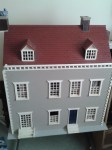
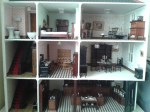
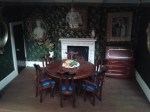
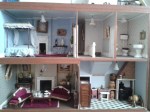
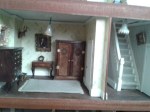
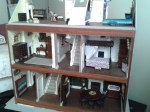
A little while ago I had to sort out a dolls house for an elderly friend of mine.
((But all I could think about was how cute this house would be for Jedediah and Octavius?? I live for domestic AU’s mannnnn♡♡♡♡))
-nicky buys it one day as a joke
-jedediah thinks its ridiculous
-octavius goes absolutely nuts with interior design
-they spend weekends at their ‘dream house’, as nicky decides to call it
-jed takes every chance he can get to make sure everyone knows he thinks its stupid and dumb and a dollhouse and ugh why would he ever want to set foot in it
–ofc he loves it
-nicky takes home ec for a semester and makes them new bedsheets and comforter/pillow cases with the fun fabric he finds in class and may or may not sew a tiny dress as a joke
-octy may or may not wear it “AS A NIGHTGOWN”
-obligatory someone opens the front, takes one look at the “bedroom”, and immEDIATELY SLAMS IT SHUT









 Death By Catchphrase