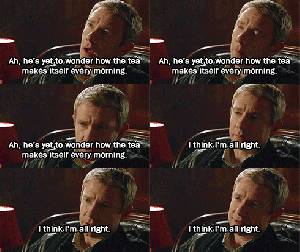
Potterlock AU: John was wounded as an Auror, not in Afghanistan. He gets away with a bit of magic in the flat, because Sherlock doesn’t pay much attention to domestic things.
Just as an FYI, because I can see people becoming confused about this very easily and quickly.
Conservative Judaism has nothing to do with politics or political ideology. Within Ashkenazi Judaism, we have different movements or “denominations” (many Jews don’t like to use denomination as it is a Christian term) all of which started when Jews were emancipated in Europe beginning in 1790 in France and ending in Romania in 1923. With emancipation came the Haskalah, or Jewish Enlightenment, wherein Jews were legally able to be full citizens of society and able to interact with Judaism in the same way Christians had been able to interact with Christianity.
A very bare-bones definition of four main movements (and there are more!) are:
Reconstructionist: Founded by Rabbi Mordecai Kaplan in the 1950s in the United States within the Conservative Movement. Judaism is seen as an “evolving religious civilization.” (Reconstructionist Rabbinical Society)
Reform: Founded by Moses Mendelsohn in the late 1700s in Germany as a way to reform Judaism to work within modern life. Halakha (Jewish law) is interpreted personally. (Union for Reform Judaism)
Conservative: Sort of a middle ground between Reform and Orthodox. Founded in the late 1800s by Rabbi Zecharias Frankel in Germany. Halakha is interpreted both according to what Rabbis have already decided (that’s where conservative comes from because it’s conserving that tradition) and by the members in an egalitarian manner. (Jewish Theological Seminary)
Orthodox (the only movement without a centralized organizational structure): This movement was a response to the Reform movement wherein Halakha is interpreted according to what Rabbis have already decided (piskei halakha or rulings of law).
These are all valid Judaic movements. Any member of any of these movements is as Jewish as a member of any other movement.
ETA: Although these movements started in Europe, these definitions and their names are US-based.
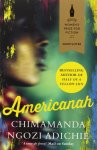
“As teenagers in Lagos, Ifemelu and Obinze fall in love. Their Nigeria is under military dictatorship, and people are fleeing the country if they can. The self-assured Ifemelu departs for America. There she suffers defeats and triumphs, finds and loses relationships, all the while feeling the weight of something she never thought of back home: race. Obinze had hoped to join her, but post-9/11 America will not let him in, and he plunges into a dangerous, undocumented life in London.
Thirteen years later, Obinze is a wealthy man in a newly democratic Nigeria, while Ifemelu has achieved success as a blogger. But after so long apart and so many changes, will they find the courage to meet again, face to face?
Fearless, gripping, spanning three continents and numerous lives, the National Book Critics Circle Award-winning ‘Americanah’ is a richly told story of love and expectation set in today’s globalized world.”
Chimamanda Ngozi Adichie is a Nigerian author. Her best known novels are Purple Hibiscus (2003), Half of a Yellow Sun (2006), and Americanah (2013).
She was born in Enugu, Nigeria, the fifth of six children to Igbo parents. She studied medicine and pharmacy at the University of Nigeria for a year and a half. At nineteen, Chimamanda left for the U.S. to study communication at Drexel University in Philadelphia for two years, then went on to pursue a degree in communication and political science at Eastern Connecticut State University. Chimamanda graduated summa cum laude from Eastern in 2001, and then completed a master’s degree in creative writing at Johns Hopkins University, Baltimore.
I’m pretending the real ending to the Night at the Musueum trilogy is that Ahk comes back to the natural history museum in a few years, saying “It was nice to visit my parents for a while, but it was time I came home.” He brings with him Tilly (who gets to live the dream of being a ninja sword owning security guard in America) and Lancelot (who’s now Ahk’s dedicated personal bodyguard). The body of the real Kahmunrah is found and acquired, and it turns out that he’s just as sassy and sarcastic as the version they encountered at the Smithsonian but not evil at all. Jed finally figures out that Octavius is more than just his best friend and yet very little changes in their dynamic besides the occasional PDA because things between them were already perfect to begin with. (“Lancelot who? The only hypnotic blue eyes I see here are yours.” “Shut up and kiss me, ya sap.”) Larry teaches history at a near-by high school and leads some kind of after school club that frequently takes visits to museums in the evenings. All his students think he’s the coolest teacher ever because he knows how to make learning actually fun and entertaining. Ahkmenrah still visits his parents every few years but always returns to his real family. Everyone lives, everyone’s happy, everyone’s together. THE END. Cut to credits.



















 Death By Catchphrase