yo treasure planet was literally the best 2d disney film ever made like the setting? the colors? the flawless transition? the gorgeous world building? the three dimensional characters? a main character who’s never pressured to get into anything remotely close to romance? complex relationships? an antagonist who has layers to his character? the soundtrack? i could go the FUCK on,
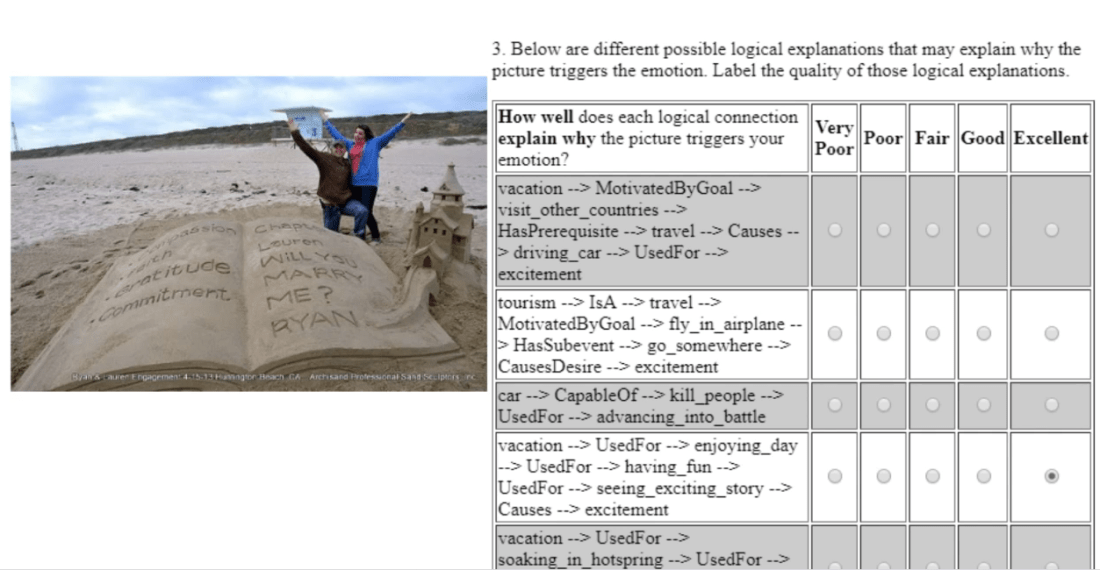
my friend is streaming himself doing mturk tasks for no reason and this one has you labeling what emotion a picture makes you feel and then rating how well the neural network figures out how you came to feel that emotion and this. this is the funniest thing i’ve ever seen a neural network produce
He made it with filmmaker and BLM activist Sol Guy and you wouldn’t know from the title, but it’s actually a short film, not a documentary, about Darren Wilson being a fucking liar.
Tumblr completely erasing the work of a Black activist/artist while simultaneously finding ways to slander an LGBTQ Jewish person at the same time due to literally not bothering to find out what the film was about in the first place? I’m shocked.
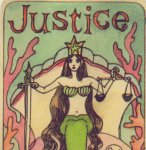
Asushunamir: Mesopotamian/Assyrian intersex goddex of queers, justice and transformation. Said to be the most beautiful being made of light who wore clothes made of stars.
Never heard of a deity’ Asushunamir, so I went looking.
Main sources I found for them via a google search are listed.I did a google search because its what a person on tumblr would do if they wanted more info. So I thought it important to look them up if I’m going to debunk.
Even more retellings, something about psychotherapy, and probably Wikipedia which gets everything on the Ancient Near East so I won’t bother.
[Note on my spelling— Inanna is Inana, Asushunamir is Asušnamir, and Ereshkigal is Ereškigal; unless in quotes. Dingir = a mesopotamia deity]
—-
1. The origin of Asušunamir.
All the websites claim their origin is connected to Inana and Enki. However, Asušunamir is not Sumerian. Therefore they have nothing to do with Inana, Enki, or Sumerian culture; contrary to those sources.
Asušunamir is very specificly Akkadian. This is important because, like the websites show, their only real appearance is in the Descent Myth. That is to say, Ištar’s Descent not Inana’s Descent.
In Inana’s Descent Enki creates two beings not one.
Here is the excerpt from the direct translation of Inana’s Descent from the ETCSL:
“Then Enki answered Nincubura: “What has my daughter done? She has me worried. What has Inana done? She has me worried. What has the mistress of all the lands done? She has me worried. What has the hierodule of An done? She has me worried.” (1 ms. adds 1 line: Thus father Enki helped her in this matter.) He removed some dirt from the tip of his fingernail and created the kur-jara. He removed some dirt from the tip of his other fingernail and created the gala-tura. To the kur-jara he gave the life-giving plant. To the gala-tura he gave the life-giving water.”
This is the translation given in the book “Inanna: Queen of Heaven and Earth” by Wolkenstein and Kramer. Which I dislike but it may be the version most Mesopotamian Polytheists are used to sadly so I’ll add it.
“Father Enki said. ‘What has happened? What has my daughter done? Inanna! Queen of all the lands! Holy Priestess of heaven! What has happened? I am troubled. I am grieve. From under his fingernail Father Enki brought forth dirt. He fashioned the dirt into a kurgarra, a creature neither male nor female. From under the fingernail of his other hand he brought forth dirt. He fashioned the dirt into galatur, a creature neither male nor female. He gave the food of life to the kurgarra. He gave the water of life to the galatur.”
The book “Dictionary of Ancient Near Eastern Mythology” by Assyriologist Gwendolyn Leick gives us this info:
“from the dirt of his finger nails creates two beings. The kur.gar.ra and the gala.tur.ra (persons who formed part of Inanna’s cult personnel, maybe some sort of transvestites) Enki […] gives them the Plant and Water of life”
Expanding on the cult-personnel bit the Assyriologist Thorkild Jacobsen makes this foot note in his translation:
“What Enki creates is two types of professional mourners […] kurgarû was a member of the cult personnel around Inanna at Uruk.”
In Inana’s Descent Myth they sneak their way through cracks in Kur’s (Sumerian Underworld) seven gates. Ereškigal is preforming typical mounring expressions that were common to ANE cultures. They sympathize with her; when she moans “oh my heart,” they join in “You are troubled, oh mistress, oh your heart.” Lamenting with someone was seen as an act of kindness. Thus after they have sympathized with her she offers them a river full of water or a field full of grain. They refuse and request the corpse “hanging on the hook,” which is Inana.
This is vastly different compared to what Ereškigal is doing in Ištar’s Descent; she is not lamenting. It is also very different then the way Asušunamir’s gets Ištar back. Here is a direct-ish translation by E. A. Speiser:
“Ea in his wise heart conceived an image; and created Asushunamir, an enuch: “Up, Asushunamir, set thy face to the gate to the Land of No Return; the seven gates of the Land of No Retuen shall be opened for thee. Ereshkigal shall see thee and be rejoiced at thy presence. When her heart has calmed, her mood is happy, let her utter the oath of the great gods. (Then) lift up thy head, paying mind to the life-water bag: “Pray, Lady, let them give me the life-water bag. That water therefrom I may drink” (89). As soon as Ereshkigal heard this, she smoter her thigh bit her finger: “Thou didst request of me a thing that should not be requested. Come Asushunamir, I will curse thee with a mighty curse! The food of the city’s gutters will be thy food, The sewers of the city shall be thy drink, The shadow of the wall shall be thy station, The threshold shall be thy habitation, the besotted and the thirsty shall smite thy cheek!” Ereshkigal opened her mouth to speak, saying (these) words to Namtar, her vizier: “Up Namtar, knock ar Egaligina, Adorne the thresholds with coral-stone, Bring forth the Annunaki and seat (them) on thrones of gold, sprinkle Ishtar with the water of life and take her from my presence!” [Footnote 89: The scheme evidently suceeds as Ereshkigal, distracted by the beauty of Asušunamir, “His appearance is brilliant,” does not recover until it is too late]”
In this version we see Ea (emphasis that Ea is Akkadian not Sumerian) creates a spirit being of dazzling beauty. They distract Ereškigal long enough that she agrees to a trap that will grant Ištar the water of life and revive her so she can escape Irkalla (Akkadian name for Kur). These two myths are tremendously different, so those sources mixing them up demonstrates there complete lack of reliability.
Leick gives this information on Asušunamir in the “Ishta’s Descent” dictionary entry, which helps clarify:
“…Ea who creates Asušunamir, a handsome, heterosexual, impotent ‘enuch’. Having pleased Ereškigal by his presence, he is to demand the ‘waterskin’ hanging on the wall, a metaphor for Ištar’s corpse. Ereškigal gets very angry at the request and curses Asušunamir, making him a social outcast.”
Asušunamir has little information available compared to the two beings in Inana’s myth.
2. Asušunamir is not deity & Some digging for real sources.
All of the websites’ claims are unfounded.
Asušunamir does not have their own entry in “A Dictionary of Ancient Near East Mythology” by Leick, “Historical Dictionary of Mesopotamia” by Leick, or “Illustrated Dictionary Gods, Demons, and Symbols of Ancient Mesopotamia” by Jeremy Black and Antony Green. Suggesting they are not even remotely a large figure in any form throughout Mesopotamia.
I checked the indexs of 9 different academically reliable books on Mesopotamia, ANE, or Sumerian. They do not have an index entry in a single one of them.
🔹Books I own which I checked for an index entry.
Treasures of Darkness: A History of Mesopotamian Religion by Thorkild Jacobsen
Religion in Ancient Mesopotamia by Jean Boretto
The Ancient Gods by E.O. James
Babylon: Mesopotamia and the Birth of Civilization by Paul Kriwaczek
The Ancient Near East Volume 1 by Amėlie Kuhrt
Mesopotamia by Gwendolyn Leick
The Sumerians by Samuel Noah Kramer
A History of the Ancient Near East by Wiley Blackwell
Dictionaries of Civilizations: Mesopotamia, Assyrians, Sumerians, Babylonians by Enrico Ascalone
I searched google scholar but found them only in relation to Ištar’s Descent Myth.
I searched “Asushunamir” on google books, and also found no reliable source that say they are a God. Only more mention of them solely in relation to Ištar’s Descent Myth.
🔹My Search in Google Books.
Greek Myths and Mesopotamia by Charles Penglase | Author describe as classical scholar in a journal article book review; otherwise mentioned simply as an “author” elsewhere. The author mentions in a footnote that Asušunamir may be a homosexual or male prostitute.
Parallel Myths by J F Beirlein | He is also simply described as “author.” The book gives a retelling that describes him as “making him far more beautiful than any “male” on earth.” Otherwise just a retelling of the myth.
Gay Witchcraft: Empowering the Tribe by Christopher Penczak | Neo-pagan author, I’ve read his books I’m not considering this to be even remotely historical reliable.
Storytelling: An Encyclopedia of Mythology and Folklore by Josepha Sherman | Anthropologist and Folklorist claims Asušunamir means “good looking.” I don’t know Akkadian so can’t confirm or deny
Queer Spirits: A Gay Man’s Myth Book by Will Roscoe | Author is LGBT Activist with a PhD in the “History of Consciousness.” I also won’t be considered his theories on the meaning of Asušnamir reliable, unless he has heavy citations. However, I do not have access to the full pages. So I see only a few lines.
Essentially all books are the myth itself in translation in some form or another; with an occasional comment. None claim they are a god or being of high significance except the book in my next point.
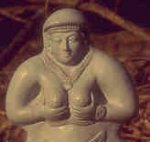
Based on Ištar’s myth there is zero indication that Asušnamir is a deity. They are never listed as a son of Ea even though they are his creation; a lack of being listed would be due to Asušunamir not being a deity. There are no depictions of them with a crown. There is no proof that figure shown at the top of link 2, a statue with large hips and holding its breasts, is Asušunamir. Also, as far as I know, no proof it is Inana which is how I usually see it captioned. (I could be wrong about it being Inana, but I’ve never been able to find the statue outside neo-pagan sources)
There is zip outside the Ištar’s descent.
3. All the misinformation seems to come from one place— A modern story written in the 1990s.
NOT Ancient Mesopotamia.
This connects Enki and Inana to Asušunamir which I showed is false. This gives a description not written in the ancient sources. This does not even maintain any ways in which Sumerian or Akkadian literature was written at all.
Its in the book Blossom of the Bone. Amazon description:
This story is a creation of Randy Conner not the ancients. Thus the description, “beautiful being made of light” is completely modern. Inana reversing Ereškigal’s curse is simply false. Asušunamir does not even have a connection to Inanna and Enki; it is Ištar and Ea.
Bottom line?
Asušunamir is not a deity. They are not a part of Ancient Mesopotamian religious cult.
They are in an Akkadian literary myth and that is about it. They are not the most “beautiful being.” Many Dingir were described as being the most beautiful or most powerful or most X, but it changed from settlment to settlement. The God of Justice is beyond a doubt Utu (Sumerian) / Shamash (Akkadian). A Goddess of intersex or LGBT in general could be Inana. A goddess of justice specifically for the disadvantage could be Nanše. As for transformation any Dingir will do, but Enki comes to mind.
Inanna: Queen of Heaven and Earth by Diana Wolkstein and Samuel Noah Kramer
The Harps that Once: Sumerian Poetry in Translation by Thorkild Jacobsen
The Ancient Near East and Anthology of Texts and Pictures edited by James B. Pritchard
A Dictionary Of Ancient Mesopotamian Mythology by Gwendolyn Leick
As always if you bring me primary literature or solid reliable academic sources (an Assyriologist, Historian, Archeologists, or other individual with ANE credentials, that is in a published book, reliable website, or an article in a reliable peer reviewed journal) I will review and amend my statements.
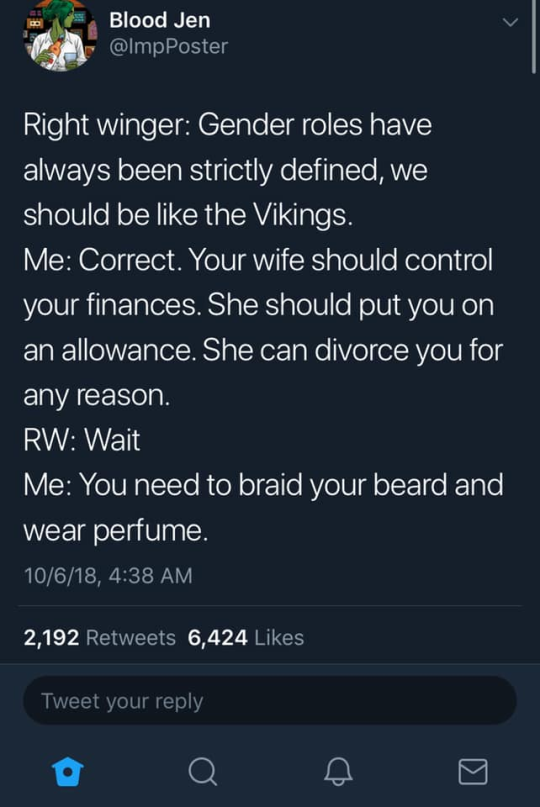
It’s genuinely worrying to me how often white supremacist misogynist dudes have a weird Viking obsession. The Vikings did not agree with you. Stop dragging the Vikings into this.
Right-wingers: We should treat the Muslims like the Vikings did! Me: You mean travel thousands of miles to strike up profitable trade deals with them in their own countries and establish mutually beneficial business arrangements? Right-wingers: Wot?





















 Death By Catchphrase