This you can even make with a cereal box, pop bottles, a craft or box cutter knife, and some duct tape. For those who are trying to beat the heat and don’t have an AC unit, or are trying to save money on their electricity bill.
To make your own, please follow the following steps for a window strip:
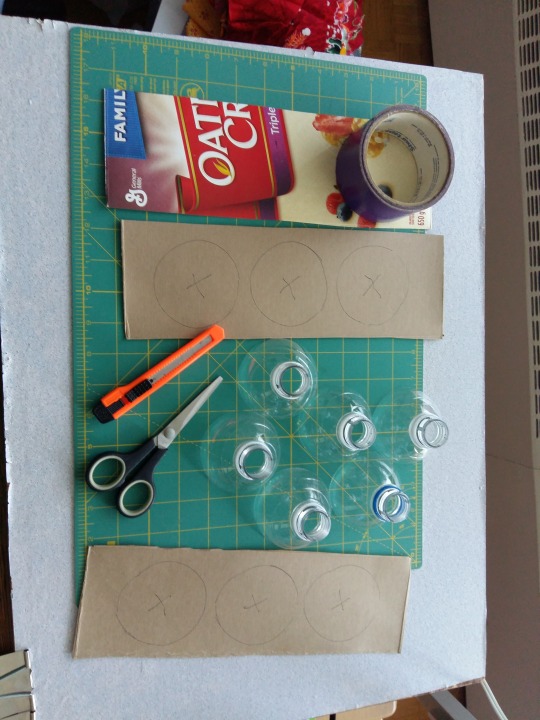
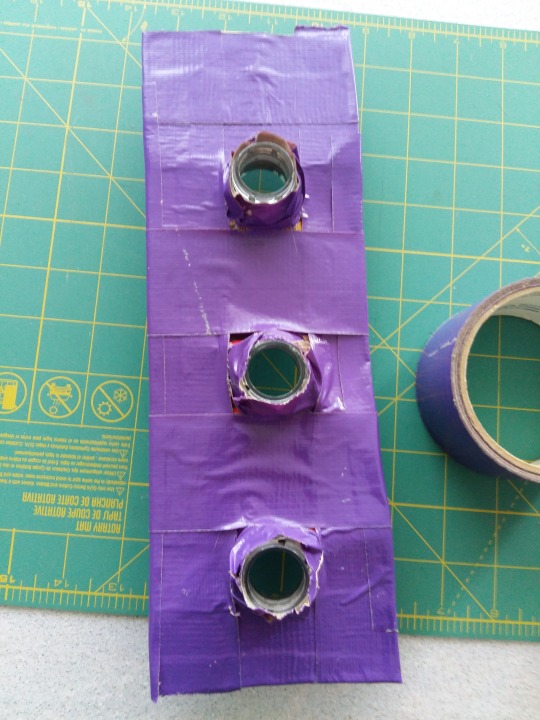
Materials: Cardboard (i used a cereal box), Duct tape (in the colour of your choice), pop bottles or water bottles (just the tops as you can see how they were cut), some cutting device to cut cardboard and/or tape, and a marker, or marking device of your choice that will mark onto cardboard
Step 1) Cut off your pop or water off at the widest point so it makes kind of a funnel shape
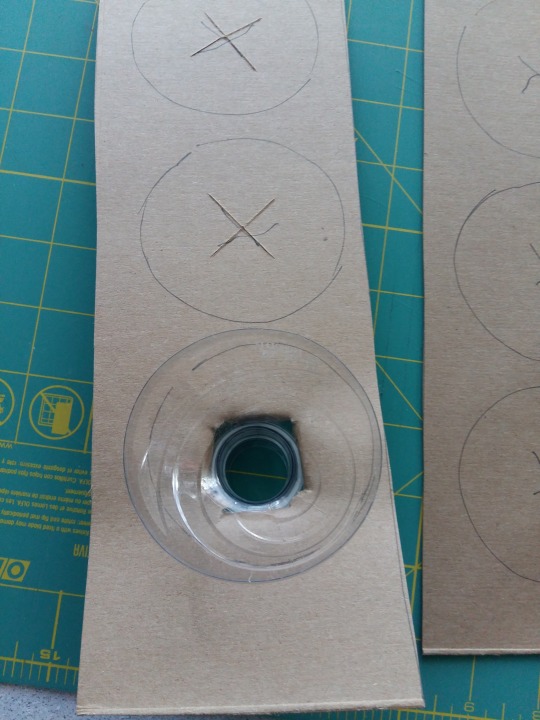
Step 2) you can make these bigger, but I made mine into a strip. Cut the cardboard into how big you want your panel or strip. Trace the base of your cap and mark the centre of where the lid goes with an X (thats where the opening will go. In the picture, I made mine just a bit wider than the pop bottle tops
Step 3) Cut the X where you marked it, and make it so it’s cut big enough to push the smallest part of your bottle through the X
Step 4) Secure all the spout parts with Duct tape (in the colour of your choice. Mine’s purple.) You do not have to do step 4, but it is advised so the pop bottle tops dont pop out of the openings you made.
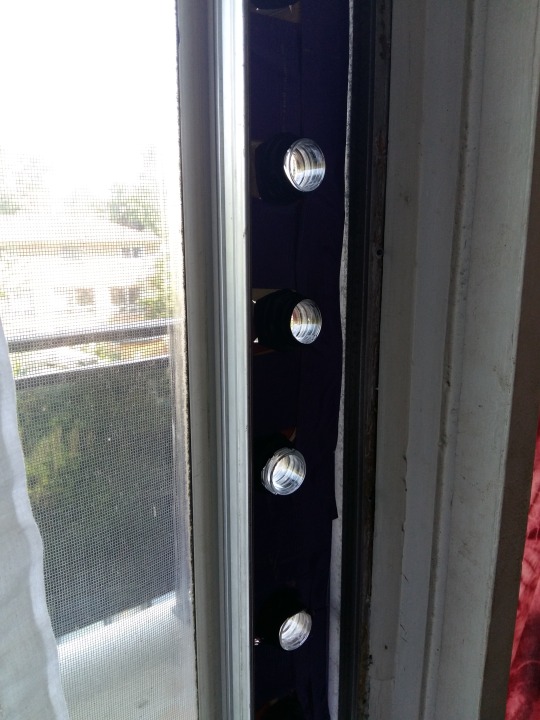
Step 5) Place your strip or panel with the biggest part facing the screen or opening of your window, and have the smallest part facing the inside of the building.
The science: as the air blows into the wider part of the pop bottle cone, it compresses the air and cools it down as it goes through the smaller part, hence cooling the air around you without having to use any electricity to make this work.
HOLY SH*T. THEY FOUND NITROGEN-FIXING CORN BRED BY INDIGENOUS PEOPLE IN MEXICO. @botanyshitposts
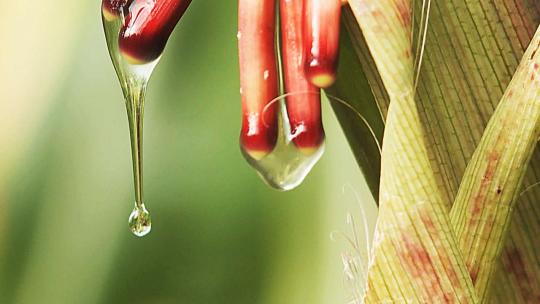
“The study found the Sierra Mixe corn obtains 28 to 82 percent of its nitrogen from the atmosphere. To do this, the corn grows a series of aerial roots. Unlike conventional corn, which has one or two groups of aerial roots near its base, the nitrogen-fixing corn develops eight to ten thick aerial roots that never touch the ground.
During certain times of the year, these roots secrete a gel-like substance, or mucilage. The mucilage provides the low-oxygen and sugar-rich environment required to attract bacteria that can transform nitrogen from the air into a form the corn can use.
“Our research has demonstrated that the mucilage found in this Sierra Mixe corn forms a key component of its nitrogen fixation,“ said co-author Jean-Michel Ané, professor of agronomy and bacteriology in the College of Agricultural and Life Sciences at UW–Madison. “We have shown this through growth of the plant both in Mexico and Wisconsin.”
…
“
Researchers are a long way from developing a similar nitrogen-fixing trait for commercial corn, but this is a first step to guide further research on that application. The discovery could lead to a reduction of fertilizer use for corn, one of the world’s major cereal crops. It takes 1 to 2 percent of the total global energy supply to produce fertilizer. The energy-intensive process is also responsible for 1 to 2 percent of global greenhouse gas emissions.
“
I’ve written about this before, this is one of those ‘saving the planet’ levels of discovery. No joke.
Because when he was a tiny scrawny rescue kitten, it was v. cold and he was v. cold all the time, so my mom put him in little shirts:
And then didn’t really…stop doing so.
Also, he is not a freely-allowed-outdoors cat; in the above case, there had been some shenanigans. Usually, he is a visits-the-outdoors-with-a-leash-and-a-human sort of cat.
[Important edit: the bird was unharmed! My aunt took them away from Basti, and aside from a bit of a shaky start, it hopped up onto the branch of a nearby tree and then flew off, possibly thanking its lucky starlings.]
This hit 3000 notes, so I’ll update it by telling you that my mom texted
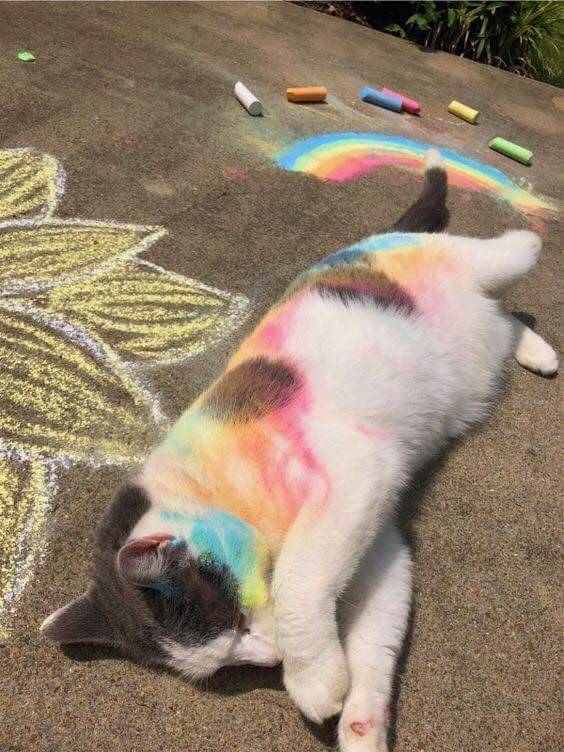
me this photo captioned with “O no! Your brother is on the patio, bucknaked!”


















 Death By Catchphrase